
Clean Architecture for Sitecore Development
Success or failure with your Sitecore site largely depends not so much on the underlying Sitecore platform but if you can successfully extend it to meet your business requirements in a performant and bug free manner. This is where design patterns play a critical role in ensuring strong performance, quality, and a sustainable code base. One pattern that aligns strongly to Sitecore development is Clean Architecture.
What is Clean Architecture
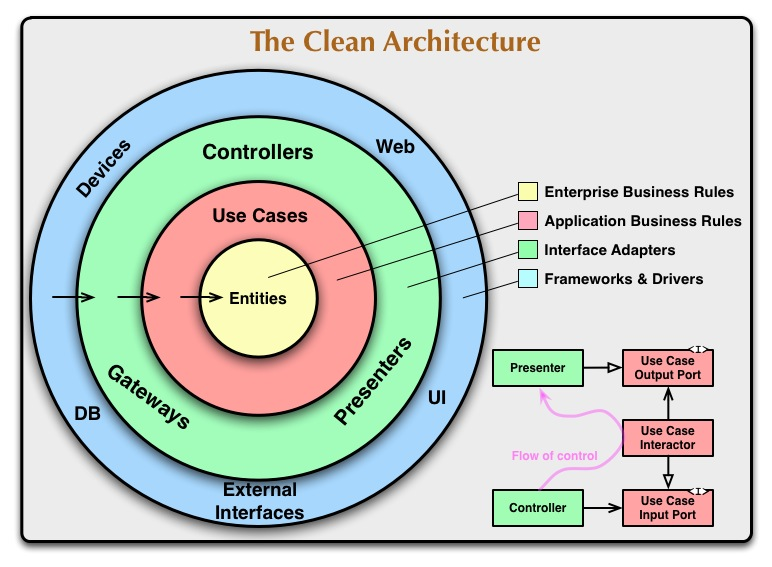
Clean Architecture is a software design philosophy that organizes code into independent, concentric layers, ensuring business logic remains isolated from frameworks, databases, and UIs. By enforcing the Dependency Rule—where dependencies point only inward—this approach maximizes testability, maintainability, and flexibility. Key components include Entities, Use Cases, Controllers, and Infrastructure, promoting a domain-centric structure.
Key Principles and Practices
The key principles and practices of Clean Architecture are as follows:
Dependency Inversion/Rule
High-level policy (business logic) does not depend on low-level details (databases, UI); both depend on abstractions. Specifically, dependencies point inward; outer layers depend on inner layers, not vice versa.
Separation of Concerns/Layered Separation
Each layer has a distinct responsibility, reducing coupling and making the system easier to maintain. Specifically:
- Entities: Core enterprise business rules.
- Use Cases: Application-specific business rules.
- Interface Adapters: Convert data from external formats to internal use cases via controllers, gateways, and presenters.
- Frameworks & Drivers: Tools like databases, devices, web front end, external interfaces, and UI.
Testability
Business logic is isolated from infrastructure, enabling straightforward unit testing without relying on external systems.
Framework Independence
The system can replace frameworks or libraries without affecting core logic.
UI and Database Independence
Changes in the user interface or data storage do not impact the domain logic, allowing for easier technology swaps.
Benefits
The benefits of Clean Architecture are as follows:
- Maintainability: Changes in frameworks or external agencies (like database vendor) do not affect business logic.
- Flexibility: System components can be easily swapped or updated without affecting the core.
- Testability: Business rules can be tested without UI, database, or web server.
Potential Pitfalls
The potential pitfalls of Clean Architecture are as follows:
- Over-Engineering: Implementing too many layers for small, simple projects can introduce unnecessary complexity.
- Increased Complexity: It may be difficult for beginners to grasp the separation of concerns, and it requires more initial setup.
Resources
Resources for Clean Architecture are as follows:
- https://www.youtube.com/shorts/PLi-dO1RiFw
- https://www.youtube.com/watch?v=1OLSE6tX71Y
- https://www.youtube.com/watch?v=TQdLgzVk2T8
- https://jasontaylor.dev/clean-architecture-getting-started
- https://medium.com/@samsaydali/clean-architecture-in-practice-676b354af1f4
- https://blog.ndepend.com/introduction-clean-architecture/
- https://medium.com/@rudrakshnanavaty/clean-architecture-7c1b3b4cb181
- https://www.youtube.com/watch?v=g2gwmqZQUkQ
- https://blog.nimblepros.com/blogs/the-importance-of-clean-architecture
- https://www.youtube.com/watch?v=MavtTqgFyAo
- https://www.linkedin.com/pulse/clean-architecture-isolating-your-domain-model-from-details-olson
- https://itnext.io/decoupling-ui-and-logic-in-react-a-clean-code-approach-with-headless-components-82e46b5820c
- https://www.youtube.com/watch?v=MavtTqgFyAo
What About Sitecore Helix
Sitecore Helix is fundamentally a form of Clean Architecture tailored for Sitecore development. It leverages modularity and strict dependency rules (Project to Feature to Foundation) to create maintainable, testable, and loosely coupled systems. Helix acts as a set of, guidelines/conventions ensuring business logic remains decoupled from specific technology implementation details.
To be clear, it is intended for MVC style projects and Headless can leverage Helix principles… but more on that in the “Sitecore Headless” section.
It is important to note that while Helix aims for a “clean” design, it requires careful implementation to avoid becoming over-engineered or creating unnecessary complexity for simple projects.
Key aspects of Sitecore Helix
The following are the core aspects of Helix… note how they are more design patterns like Clean:
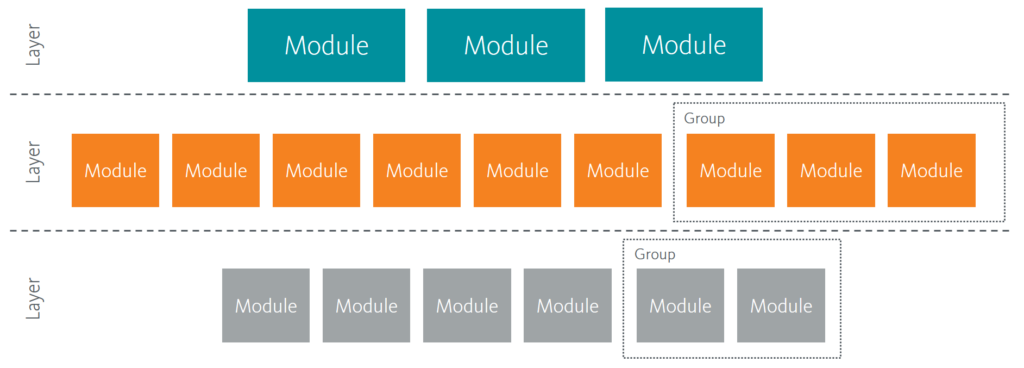
Modular Layers
Divides solutions into Feature (business functionality), Foundation (core libraries/modules), and Project (specific site implementations) layers.
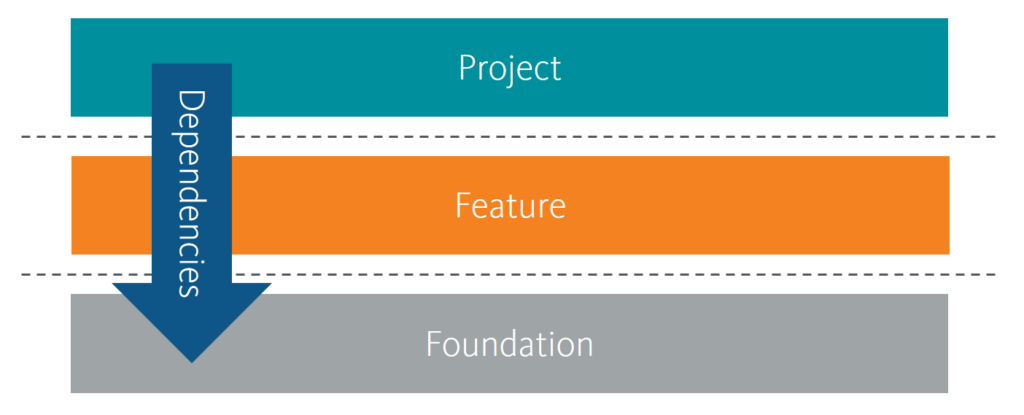
Dependency Direction
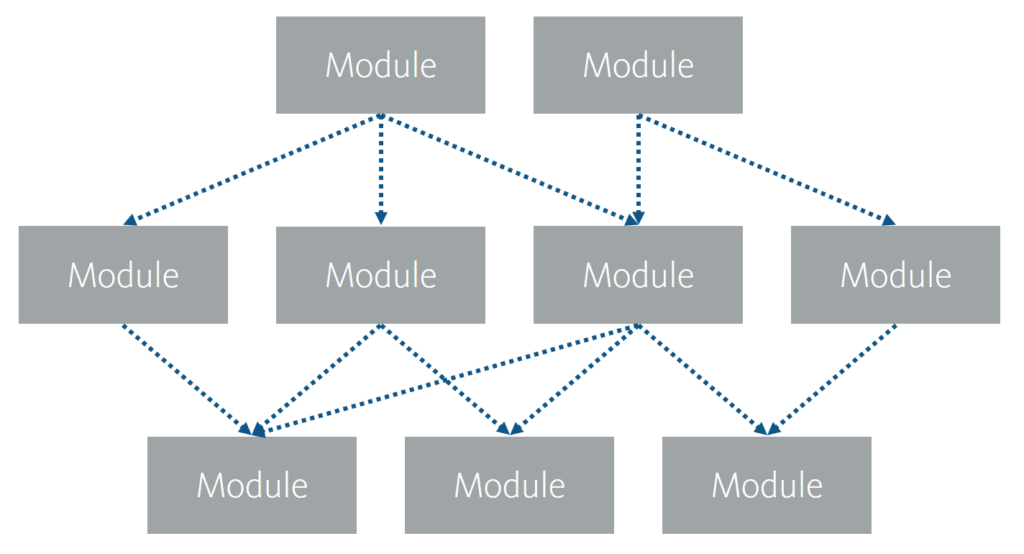
Follows strict rules where higher layers depend on lower layers to minimize dependencies. Examples of the flow from Project to Foundation are as follows… noting that Clean follows a same pattern in this regard.
SOLID Principles
Promotes building well-factored, stable applications using modular design.
Not a Framework
Helix is a set of best practices and architectural principles, not a pre-built tool.
Applicability
While originally for traditional MVC, its modular principles apply generally, though Sitecore currently does not strictly recommend Helix for all headless projects, focusing instead on industry-standard techniques.
Resources
Resources for Helix are as follows:
- Helix.Docs/helix/principles/architecture-principles/_static/image3.png at master · Sitecore/Helix.Docs · GitHub
- Sitecore Helix Architecture, Principles and Its Benefits | Altudo
- https://youtu.be/83Eln1mi3No?si=kbs5jRMw1US1XRRJ
- https://github.com/DanRegheni/sitecore-helix-clean-architecture
- https://adroitent.ai/sitecore-helix-architecture-guide/
- https://www.oshyn.com/blog/sitecore-helix-tips
- https://www.linkedin.com/pulse/why-helix-important-sitecore-development-rohit-chopra
- https://www.altudo.co/insights/blogs/understanding-sitecore-helix
- https://www.youtube.com/watch?v=ktRYJyboI3k
- https://sam-solutions.com/blog/sitecore-helix/
- https://www.youtube.com/watch?v=MavtTqgFyAo
What About Sitecore Headless
All because you decide to leverage Sitecore Headless doesn’t mean you abandon the core principles of Helix (which actually focus to modularity and dependency flow), but it does mean a tighter embrace of Clean patterns. Specifically:
Sitecore is not recommending the use of the Helix architectural guidelines for headless projects. Instead, we encourage our partners and developers to adopt industry-standard practices that align with the specific implementation technologies being utilized. | Update on Development Practices for Headless Projects – Sitecore Community
These industry standard practices for Headless embrace Clean patterns and microservices… so if you followed Helix with modularity and dependency flow in mind, you are more prepared to develop single responsibility APIs (the S in SOLID).
To be clear, if you went all out on following Helix to the last letter, you will not be porting your Helix/MVC focused components straight to a Headless environment… but you can abstract out and bring that existing modular business logic into your Sitecore Headless solution.
Resources
Resources for Sitecore Headless are as follows:
- Sitecore Headless Development | Product Overview | Sitecore Developer Portal
- https://community.sitecore.com/community?id=community_blog&sys_id=c0c103ea1b81bdd038a46421b24bcba9
- GitHub – Sitecore/headless-examples: Samples and examples of various implementation and integration scenarios for headless Sitecore implementations. · GitHub
- https://youtu.be/fAVlap-qYPM?si=AzJqHSaHGIQE0ml2
- https://www.youtube.com/watch?v=D7UPYP7AQQ4&list=PL1jJVFm_lGnzqYagW1UahIBeqTIYSBQMc
Core Principles of Clean Architecture that Apply to Sitecore Development
Sitecore Helix and Sitecore Headless both align with the principles of Clean Architecture by enforcing a strong separation of concerns and managing dependencies, although they implement these concepts in different ways and at different architectural scales.
Mapping of Clean Architecture to Sitecore Helix
Sitecore Helix is a set of guidelines for building modular, maintainable Sitecore solutions within a traditional or hybrid architecture. It aligns with Clean Architecture principles, especially the Dependency Inversion Principle (DIP), through its layered structure:
- Foundation Layer: Corresponds loosely to the inner layers of Clean Architecture, containing core utilities, frameworks, and low-level shared functionalities. These modules are the most stable and abstract, with other layers depending on them, but not vice-versa.
- Feature Layer: Represents specific business capabilities (e.g., “News,” “Search”). This layer can be seen as containing elements similar to Clean Architecture’s Use Cases (application logic) and Entities (domain models), as it houses most of the business logic.
- Project Layer: This is the outermost, least stable layer, specific to a particular website or channel. It pulls together features to create the final presentation, much like the Presentation/UI layer in Clean Architecture, which acts as the entry point for the application.
Key Alignments
- Dependency Rule: Helix strictly enforces unidirectional dependencies (Project -> Feature -> Foundation), mirroring Clean Architecture’s rule where dependencies flow inward toward the core business logic.
- Modularity & SRP: Both emphasize breaking down the system into modules/components with a single, clear responsibility (Single Responsibility Principle).
- Testability: By isolating core logic in lower layers (Foundation/Feature), it becomes easier to test without relying on external frameworks or the Sitecore core.
Mapping of Clean Architecture to Sitecore Headless
Sitecore Headless development involves a more significant physical separation of concerns, decoupling the content management back-end from the front-end rendering application.
- Back-end (Sitecore Instance): Focuses purely on content management, data storage, and the delivery of raw content and layout data via APIs (like the Layout Service or Experience Edge GraphQL endpoints). This acts as an “infrastructure” detail from the perspective of the front-end.
- Front-end (Rendering Host): An independently running application (e.g., Next.js, React) that consumes the APIs to render the user interface. This serves as the Presentation layer/UI, which is isolated from the underlying CMS infrastructure technology.
Key Alignments
- Separation of Concerns: The physical decoupling clearly separates the presentation logic from the data/business logic managed within Sitecore, aligning with Clean Architecture’s core tenet.
- Independent Development: Front-end developers can work independently of the back-end Sitecore implementation, allowing for the use of preferred front-end frameworks and separate scaling strategies.
- APIs as Boundaries: The APIs serve as clear, defined boundaries (similar to the ‘Interface Adapters’ in Clean Architecture) through which data flows, ensuring loose coupling between the systems.
- Flexibility: The architecture allows for swapping out the front-end presentation layer without impacting the core content management functions, demonstrating the “independent of frameworks” principle.
In essence, Helix applies Clean Architecture principles within the back-end solution structure, while Headless applies these principles at a higher, system-level architecture by physically decoupling the presentation layer from the core CMS.
Conclusion
If you have already been leveraging Helix or standards for Sitecore Headless… surprise! You have already embraced the core tenants of Clean Architecture. If not, today is the perfect day to start breaking your application up into the proper layers and flow to decouple and greatly enhance both the user and developer experience for your Sitecore environment.